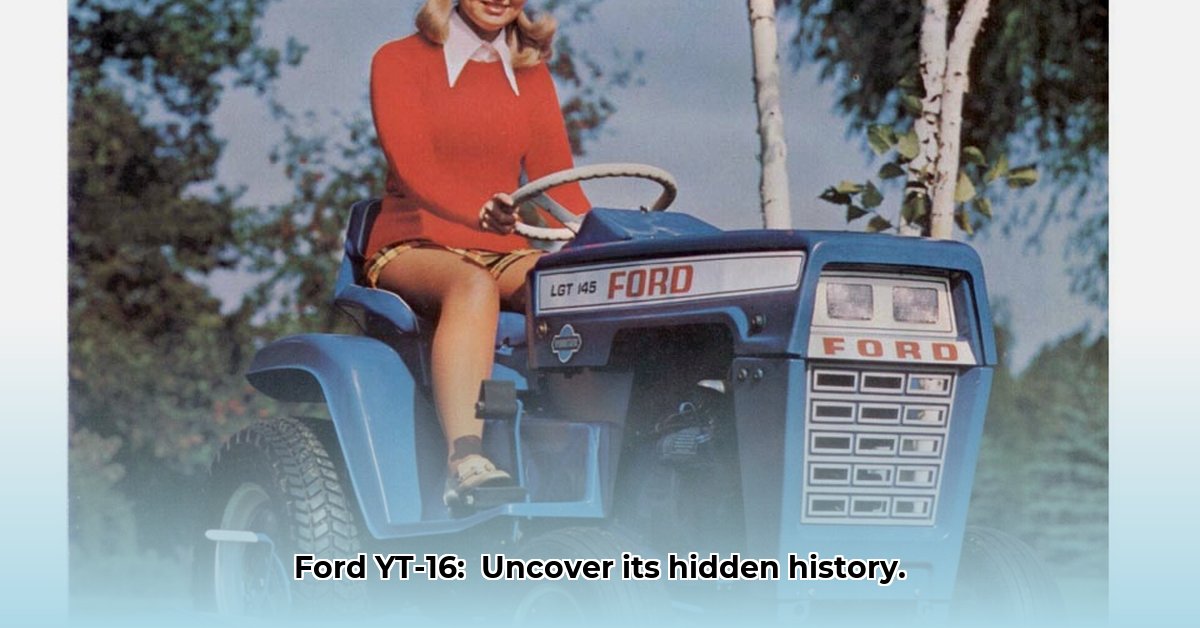
The Ford name is synonymous with American automotive prowess. Yet, beyond iconic cars and trucks, Ford also briefly ventured into the world of lawn tractors. While they didn't manufacture these machines themselves, Ford strategically partnered with companies like Gilson, Jacobsen, and Toro, leveraging their brand recognition to penetrate the market. This article delves into the Ford YT-16, a Gilson-built tractor that offers a fascinating glimpse into this lesser-known chapter of Ford's history. Whether you’re a seasoned collector, a restoration enthusiast, or simply curious about vintage lawn tractors, this comprehensive guide will provide valuable insights. For more on small Ford tractors, check out this helpful resource.
The YT-16: A Gilson-Built Workhorse
The Ford YT-16, manufactured by Gilson Brothers Company during the 1980s, exemplifies Ford's OEM partnership approach. It represented a typical mid-range lawn tractor of its era—reliable, robust, and surprisingly affordable. Before delving into its specifics, let's examine the broader lawn tractor market that shaped the YT-16’s design and market positioning.
The Lawn Tractor Boom: From Simple to Sophisticated
The post-World War II suburban boom fueled a remarkable expansion in the lawn tractor market. The simple push mowers of the past were gradually replaced by more powerful and feature-rich machines. Key technological advancements, particularly the introduction of hydrostatic transmissions (offering automatic speed control), significantly enhanced ease of use. This period marked a golden age for innovation in lawn tractor design, with manufacturers like Simplicity, Wheel Horse, and John Deere vying for market dominance. The Ford YT-16, a product of this era, played a noteworthy if relatively modest role. Did this increased demand for powerful lawn care equipment translate into significant profits for all manufacturers? The answer is nuanced, as market saturation and shifting economic factors played their part.
The YT-16: Under the Hood and on the Lawn
The Ford YT-16 typically featured a selection of air-cooled, single-cylinder engines offering sufficient power for most residential lawns. Buyers could choose between a manual transmission or the more user-friendly hydrostatic drive (similar to an automatic car transmission). Its design prioritized practicality and ease of use over flashy aesthetics. Detailed specifications, including engine variations across production years, can be found in original sales brochures and owner's manuals – valuable resources for collectors and restoration enthusiasts.
Market Positioning and Legacy
A Ford YT-16, adjusted for inflation, would command a considerably higher price today than its original cost, highlighting the lasting interest in classic garden tractors. While precise sales figures remain elusive, the YT-16's legacy is inextricably tied to Ford's overall business strategy—expanding its brand presence via strategic partnerships. The eventual discontinuation of the YT-16 likely reflected broader industry shifts towards larger, more specialized equipment, culminating in Ford's sale of its farm equipment division to Fiat. How did this evolution in the lawn tractor market impact the overall design and features of subsequent models?
Collector's Perspective: Restoration and Parts Availability
The Ford YT-16 has cultivated a dedicated following among collectors. While restoration is generally feasible, sourcing parts can present challenges. Fortunately, online forums and collector clubs offer invaluable resources for locating information and hard-to-find components. Furthermore, minor variations exist among YT-16 models produced across different years, adding another layer of interest for serious collectors. What are the most common issues encountered during restoration and what is the most sought after Model variation of YT-16?
YT-16 Variations and Identification
Subtle differences distinguish YT-16 models across manufacturing years. These variations might encompass alterations to the engine, transmission, or cosmetic features such as decals and paint schemes. Model numbers – such as 09GN2151 or 9607431 – provide clues for identification, however, deciphering these codes often requires significant research into original documentation.
Conclusion: A Lasting Impression
The Ford YT-16 stands as a testament to a specific period in lawn tractor history – an era marked by technological advancements and a burgeoning suburban landscape. It represents a notable, if less prominent, chapter in Ford's broader business strategy. While not revolutionary in design, the YT-16 holds a unique place in automotive history due to its interesting design, features and collector's value. Its appeal endures among both casual enthusiasts and dedicated collectors, reflecting not only its technical qualities but also its historical context.